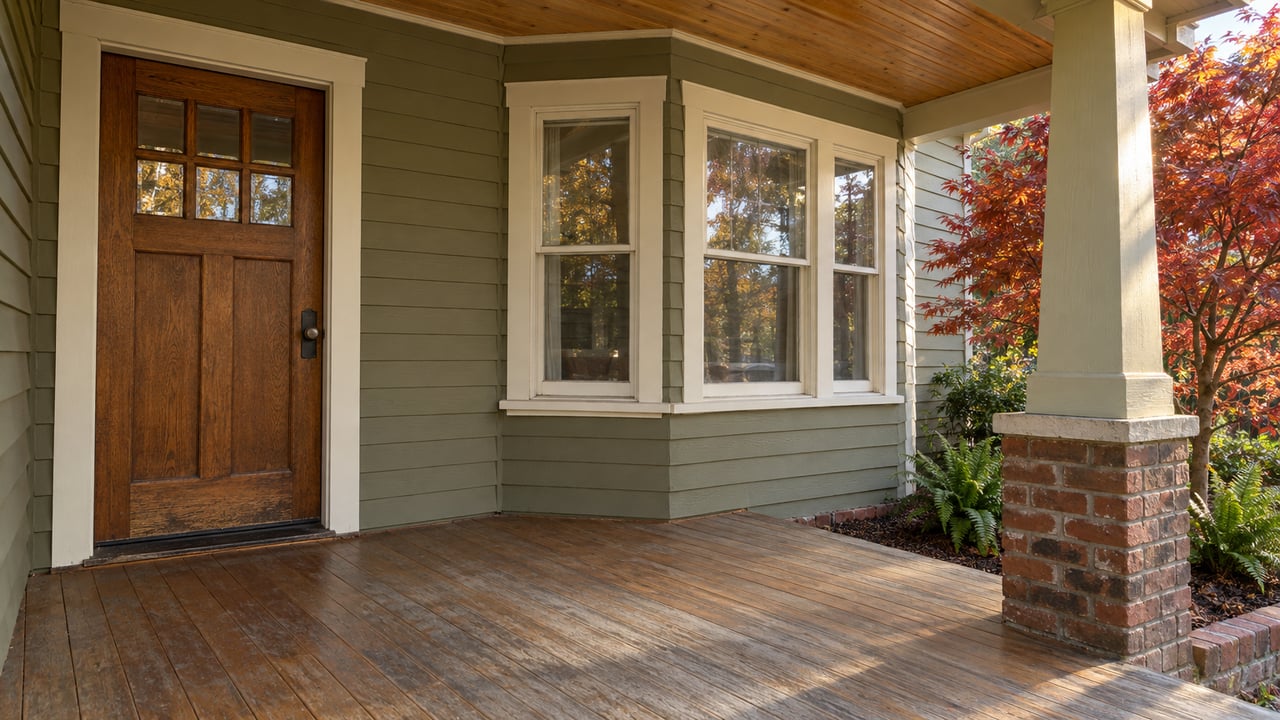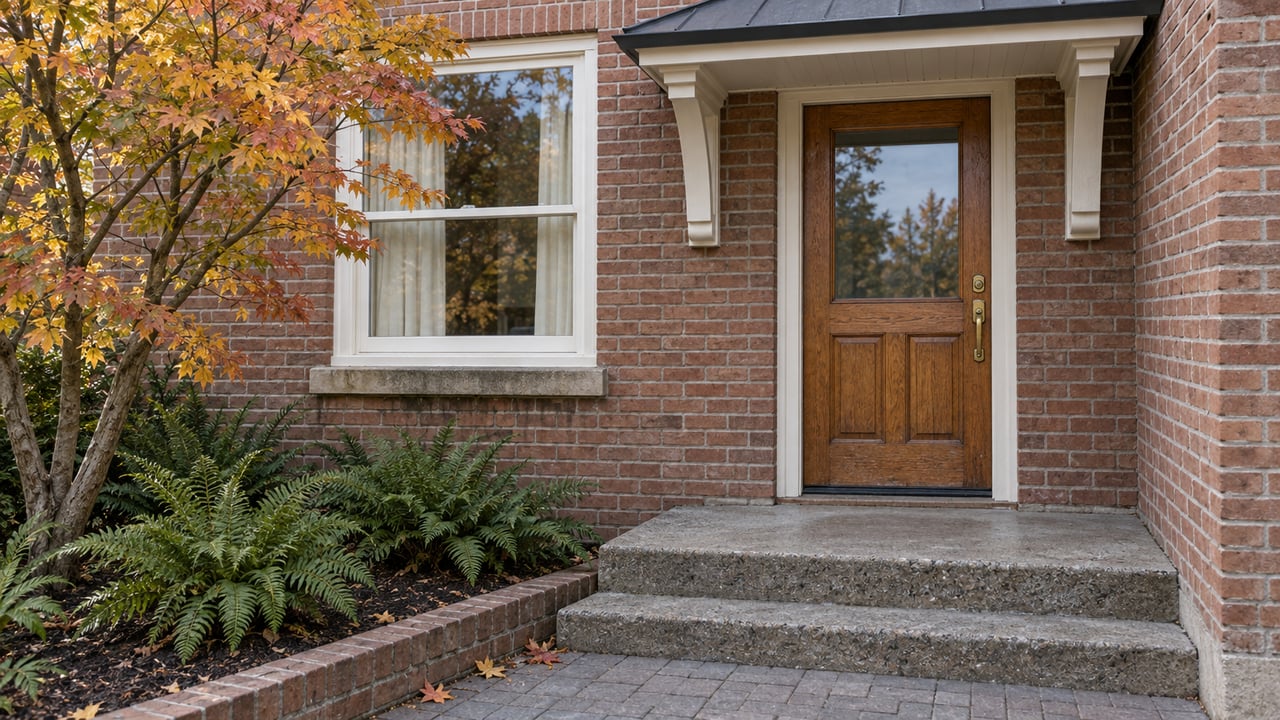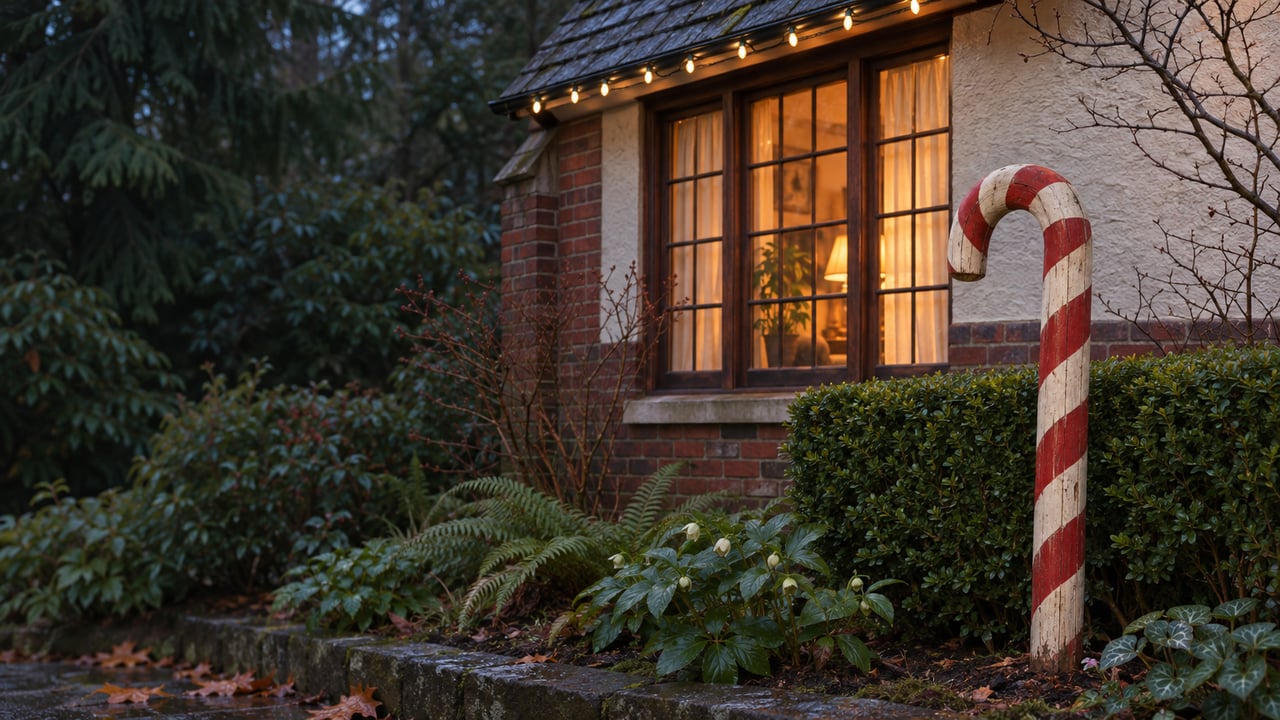
When David Sweeney brought his family's candy cane out of the garage for a reporter, he explained exactly where it came from. "It's made out of a six-inch stove pipe and we got it from the owner of the house when we moved in," he told KIRO Newsradio in a 2023 MyNorthwest story. "So it might be 60 years old at this point, I honestly don't know."
He also admitted that every year he threatens to repaint it, never gets around to it, "and then out it goes again." Setup takes a moment. A spike goes into the ground and the cane slides over it.
That cane and its history explain how Candy Cane Lane works. The Park Road display runs like an inheritance. Each house's striped cane passes to the next owner, and so does a share of the job. That arrangement has kept the display going since the Truman years with no budget or sponsor and almost nothing written down.
A Fixture That Changes Hands
Each house on the lane displays one official six-foot cane, built from sections of stovepipe that were probably bought at a hardware store nearly 80 years ago. Maggie Sweeney, who has lived on the street since 2001, told MyNorthwest that the cane is the one thing that stays put when a family moves out. "Many of us have these original old candy canes, and that is how [it] got to be called Candy Cane Lane."
Wedgwood in Seattle History traces the canes to 1949. That year the Seattle Times held a Christmas decorations contest, and Park Road residents made matching candy-striped poles so every house would share a common element. The street won top prize, and the name stuck. The Times ran those outdoor decorating contests every year from 1927 to 1968, except during World War II. Park Road picked up honors many times between the late 1940s and the 1960s.
Some of the original poles have rusted past use, and replacements have been made from plastic pipe. The material has changed, but the arrangement hasn't. Every house gets one cane, and everything else in the yard belongs to whoever lives there now. Each family designs, installs and maintains its own set of decorations. Past displays have included painted plywood reindeer, strings of colored lights and modern inflatables. Each house also picks a theme, such as Toy Factory.
The Job Transfers Along With the Cane
New owners don't always know what they're signing up for. Joseph Manalang and his wife bought their house on Park Road in October 2009. Manalang told KIRO Newsradio, as MyNorthwest reported, that when the subject came up he answered, "Sure I like Christmas. I'll put up some lights." The couple didn't plan to move in until January, but they stopped by in December to see the display. "I had no idea until we walked the street what was going on," he said. "And we were like, 'Oh no, what did we get ourselves into?'"
By 2023, MyNorthwest was identifying Manalang as one of the organizers. That year he and his wife were among the biggest boosters of the weekend work parties that build the display before opening night.
The biggest piece of shared equipment goes back to an earlier generation on the street. Bill Rehder, a logging engineer, moved to the lane in the 1960s and came up with a mechanized, animated display for the traffic circle. The carousel he built is still maintained and set up every year by Park Road residents. In 2023, an electric motor hidden in a holly bush turned it, and its decorative panels rotate through themes from year to year. That season's theme was The Nutcracker.
Most of the know-how lives with the neighbors. MyNorthwest reported that instructions for setting up and for what goes where are mostly not written down anywhere. A big book of neighborhood notes and meeting minutes, which might have filled in more of the history, went missing several years ago. So each year's display gets rebuilt from memory, by people who learned it from whoever lived on the street before them.
Manalang described what the street gets in return:
"We say 'Yeah, it's a gift to the community' to give something for people to celebrate, but I think it's really a gift to us. Because of Candy Cane Lane, we all come together, we all decorate our houses, we all decorate the circle as a community. Because of that, we know all of our neighbors."
He said that to MyNorthwest in 2023, and he added that his kids "have been in half these houses."
How the Street Pays the Light Bill
The neighbors don't accept money from visitors. "One thing we don't do is we don't accept any money," Maggie Sweeney told MyNorthwest. "We've really stuck to the whole non-commercial aspect of being just a neighborhood place." She called the whole effort "homespun."
Residents cover the cost themselves. According to Wedgwood in Seattle History, they hold a garage sale every summer to help with their electric bills at Christmastime. Planning starts in September, and setup begins after Thanksgiving. The lights are LEDs now, Sweeney said, and she recalled that someone once called the street "the Las Vegas of Seattle."
The one thing the street does collect is food. Neighbors gather nonperishables for the University District Food Bank. MyNorthwest reported in 2023 that the previous season's drive brought in two tons. Visitors pay nothing to walk the lane, and the food drive is the only thing it asks of them.
What to Bring for the Bins
The 2026 season notice says the donation bins sit at the end of the street and asks for canned goods, boxes of mixes or plain pasta. The University District Food Bank's own most-needed list gives more ideas for what to grab on the way out the door:
- Pasta and sauce, including tomato, pesto or peanut
- Mac and cheese, plus kid-friendly meals like ramen bowls or tuna salad with crackers
- Peanut or other nut butter, and jelly
- Soups, stews, broths and bouillon
- Rice, canned beans and canned fish
- Cereal, granola and oatmeal
- Cooking oil and alternative milks such as soy, oat or rice
- Diapers in larger sizes, wipes, baby formula and baby food
- Toilet paper, bar soap, toothpaste and menstrual products
The food bank says fresh produce and meat are consistently the foods its customers request most. Because they need specialized storage, it typically can't take them through community drives, and it uses financial donations to buy them year-round. If you miss the lane, there's a donation barrel inside the southwest entrance vestibule of the QFC in University Village.
The 2026 Season: Dec. 5 Through New Year's Day
The lights come on at 4 p.m. on Saturday, Dec. 5, 2026, and the last night is Friday, Jan. 1, 2027. Viewing runs from 4 to 9:30 p.m., and until 11 p.m. on Friday and Saturday nights. You can walk or drive through, and some nights will be pedestrian-only. The organizers post those dates and other updates on the Candy Cane Lane Facebook page.
The lane is on Park Road NE, just off NE Ravenna Blvd and lined up with 21st Ave NE. MyNorthwest places it just north of Greek Row, down the hill toward University Village. In 2023, the display involved about 25 homes on that short street.
Walking suits the place. Sweeney told MyNorthwest that most people walk through and pick up hot cocoa from the little store across Ravenna Boulevard. "If you're looking for a big light display, this is not the place to go," she said. "You're going to come here for tradition."
If you're coming by light rail, Sound Transit's Roosevelt guide describes Cowen Park as a short walk from Roosevelt Station on the 1 Line. From there, a path heading east leads into the Ravenna ravine. Cowen Park sits right next to Ravenna Park. In December, it's dark by the time the lights come on, so plan for the walk back too.
If you live on a street with its own tradition, whether it's a cane that stays with the house or a carousel the neighbors set up together, a buyer will want to hear about it. If you're thinking about selling and how to tell a buyer about your street's traditions, I'm happy to talk it through. Joyce Juntunen is here when you're ready. Let's Connect.